Vibecoding a Swift Desktop App - Claude Token Cat
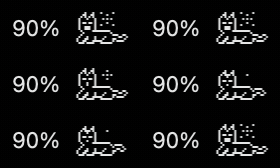
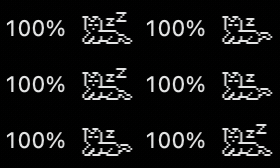
I built a desktop application named Claude Token Cat- A macOS menu bar app that visualizes your Claude usage with an animated pixel art cat
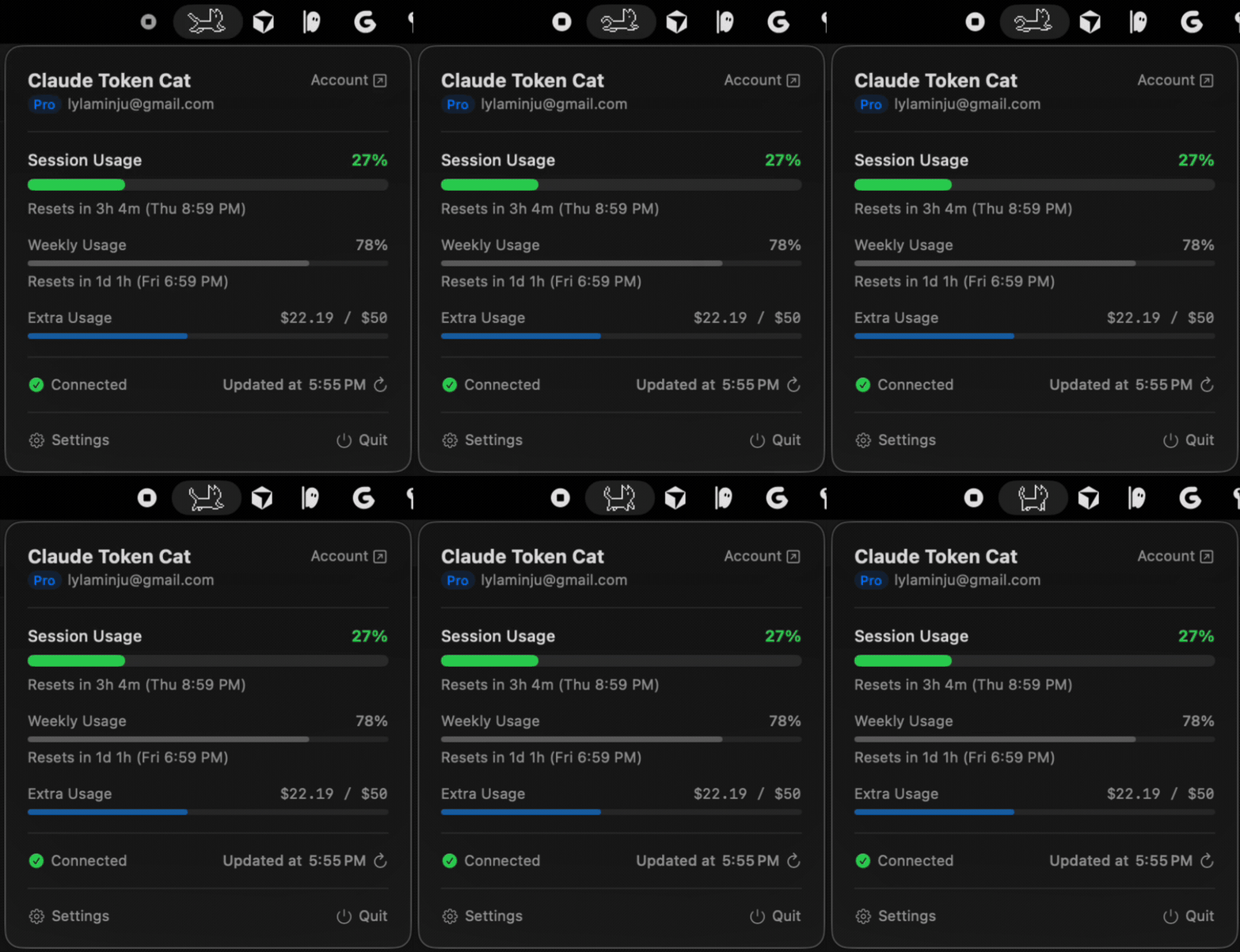
This was my first vibecoding experience with Claude Code
Without understanding the language (Swift) or framework (SwiftUI), I relied heavily on AI prompting.
Even when features worked correctly, it was hard to immediately trust AI-generated code
-
Every few commits, I asked whether there were any memory leaks, inefficient logic, dead code, or missed edge cases. I also codified this as a self-review checklist in the project's
CLAUDE.mdso the AI would perform these checks automatically before presenting code changes.- There were no critical issues, but these prompts led to meaningful improvements. For example, it caught a retain cycle in
TokenUsageManager's Task blocks where[weak self]was missing, and fixed an edge case whereCancellationErrorwasn't handled separately, causing a brief error flash in the UI. (511849c)
- There were no critical issues, but these prompts led to meaningful improvements. For example, it caught a retain cycle in
-
I did use AI to improve AI-generated code, but I still wonder how to fully verify AI-generated code. Then again, even human-written code is never 100% perfect. Maybe I'm chasing an unrealistic ideal. I'll just need to respond quickly when bugs are found later.
- After fix commits, I recorded the lessons in memory or
CLAUDE.mdto avoid repeating similar mistakes.
- After fix commits, I recorded the lessons in memory or
-
Occasionally, when I spotted questionable logic, I asked the AI why it wrote it that way and requested improvements. (Also updated memory and
CLAUDE.mdto prevent similar future mistakes)
 private static func formatSubscriptionType(_ type: String?) -> String? {
-        guard let type = type else { return nil }
-        // e.g. "claude_pro" -> "Pro", "claude_max" -> "Max"
-        if let last = type.split(separator: "_").last {
-            return last.prefix(1).uppercased() + last.dropFirst()
-        }
-        return type
+        switch type {
+        case "claude_pro": return "Pro"
+        case "claude_max": return "Max"
+        default: return nil
+        }
     }
The app features came together within 3 days, but the pixel art took much longer
Whether due to my lack of prompting skill, the AI-generated pixel art just wasn't good enough. I could intuitively tell the cat animations looked unnatural, but I couldn't pinpoint exactly why, unlike a UI bug, which I can describe explicitly.
After several rounds of back-and-forth, I ended up creating all the pixel art from scratch myself in Piskel. (It took a long time to create natural movements because I didn't fully understand how cats move. The pixel art still isn't perfectly natural even now...)
The only thing AI handled was converting .piskel files to Swift code via a Python function.
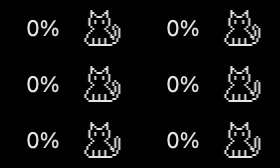
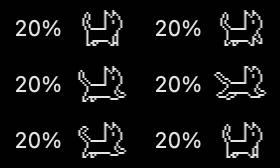
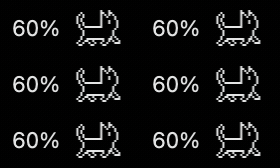
Easily installable via Homebrew 😺
brew install --cask lylaminju/tap/claude-token-cat